
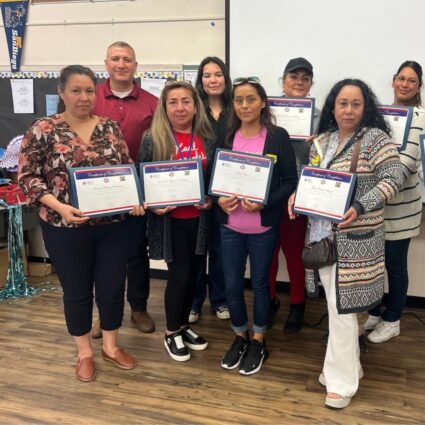
2026 Grantee Spotlight: Parent Organization Network
Grantee Spotlight: Parent Organization Network
Since this spotlight was first published in 2023, Parent Organization Network’s (PON) work to elevate parent voices in English Learner (EL) education has begun influencing statewide policy.
In 2025, an Assembly Education Committee consultant convened a study group focused on updating California’s EL reclassification criteria — a system that has been in place for 50 years.Through its direct engagement with families, PON contributed parent perspectives and field-based insights to the study group’s deliberations. One area where PON’s experience helped inform the conversation was around the current parent consultation requirement in the reclassification process.
PON emphasized that parent engagement should not occur only at the final stage of reclassification, but throughout a student’s English language development journey. A revised CA Assembly Bill 2555 is ready to be voted on by the Senate before heading to the Governor’s desk for signature. Beginning July 1, 2027, this bill would require districts to notify parents of EL classification and encourage them to engage as a partner towards reclassification.
Then to reclassify, the student would need to show a proficient score in the language proficiency assessment, rather than engage in a complicated multi-step process for which many students do not currently receive sufficient information or support.
While the original purpose of Sobrato Philanthropies’ support was to build parent leadership and deepen understanding of the systemic barriers families face, this work may now contribute to broader statewide changes in EL policy and practice.
The spotlight below has been edited to reflect the evolving policy landscape and other updates.
MOVING PARENTS FROM INDIVIDUALISM TO COLLECTIVISM
We sat down with Araceli Simeón, former Executive Director and now Strategic Advisor for the Parent Organization Network (PON), to learn more about PON’s work and their English Learner (EL) Campaign, which engages parents, students, and administrators to advance the interests and outcomes of ELs in the educational system.
“Our mission is to unite the power of underserved parents in order to break through barriers in public education so that parents and educators can effectively partner to support students at the end of the day,” Araceli said. “I’ve been working with our Parent Organization Network since its inception in 2005.”
As a network, PON has 14 member organizations within Los Angeles County that collectively work to identify and remove barriers that hinder family and community engagement in schools. Their efforts include policy advocacy and monitoring implementation, capacity building, and engaging with members and partners to assess progress, challenges, and needs.
PON primarily works in Los Angeles, Long Beach, Lynwood, Pomona, and Whittier City school districts, with the organization investing new resources since the development of this training in the 2022-23 school year to advance EL campaigns in the Pomona, Long Beach, and Los Angeles school districts. As a result of the EL Campaign, PON developed a program, 4 English Learner Success (4ELS), to broaden parents’ knowledge about English Language Development and their children’s progress towards reclassification and further success in schools.
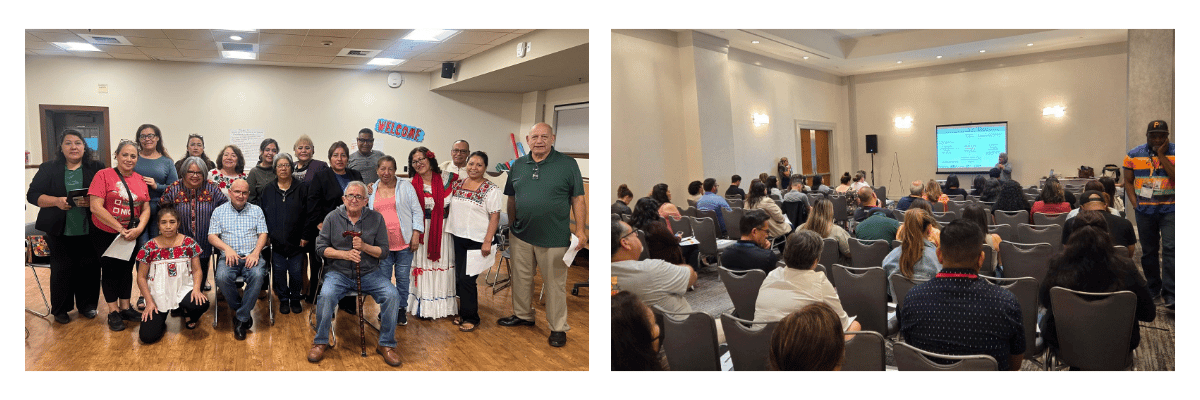
“During the campaign we learned that parents don’t know that their children are ELs, and that includes parents whose children are enrolled in dual immersion programs,” Araceli said. “Parents assume that because their children were born here and speak more English than Spanish, they’re fluent English speakers. Through the [4ELS] training we are able to open their eyes, open their children’s academic records, and really help parents assess their children’s progress in language development and toward reclassification.”
Through the development of this training in 2022-23, PON successfully connected with 450 parents and built the capacity of 83 parents. These parents completed nine workshops, resulting in 12-18 hours of training total on the in’s and out’s of EL programs, how instruction works, what reclassification criteria involves, and ultimately graduated the program with a greater understanding of where their child stands in the education system.
As Araceli explained, the program’s impact lies in connecting and engaging with parents about their children’s education and learning. She shared the story of one school that was considering cutting their EL coordinator in budget cuts even though the district had a high population of ELs. Once parents became connected with 4ELS coordinators and understood what was happening, they immediately attended the school’s meeting and advocated for their children to keep the EL coordinator position. Araceli affirmed that once parents collectively voiced their concerns, the coordinator position was retained. “It seems like there’s no accountability,” Araceli said. “The state doesn’t want to become responsible, but county offices are not really playing that role either. So it really comes down to the parents and exercising their rights and making them valid.”
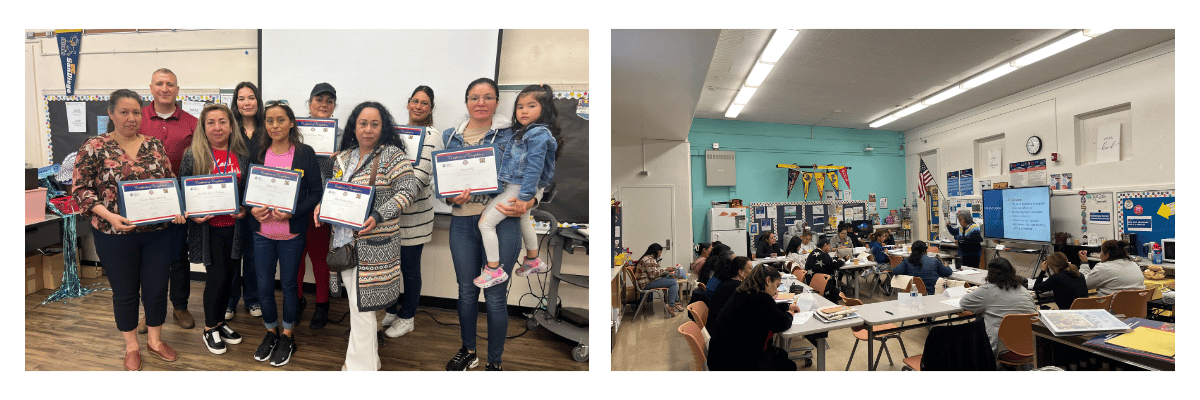
Schools typically rely on one-way communication methods with parents, which can be both ineffective and exclusionary. Although districts have been taught that they need to use two-way communication where both the sender and receiver invite and offer feedback, Araceli said, they seldom follow through with that promise.
Whether it’s a lack of information surrounding English Language Development on report cards, or the digital access barriers for low income families, school districts continue to struggle to accurately communicate students’ progress—and shortcomings—to parents.
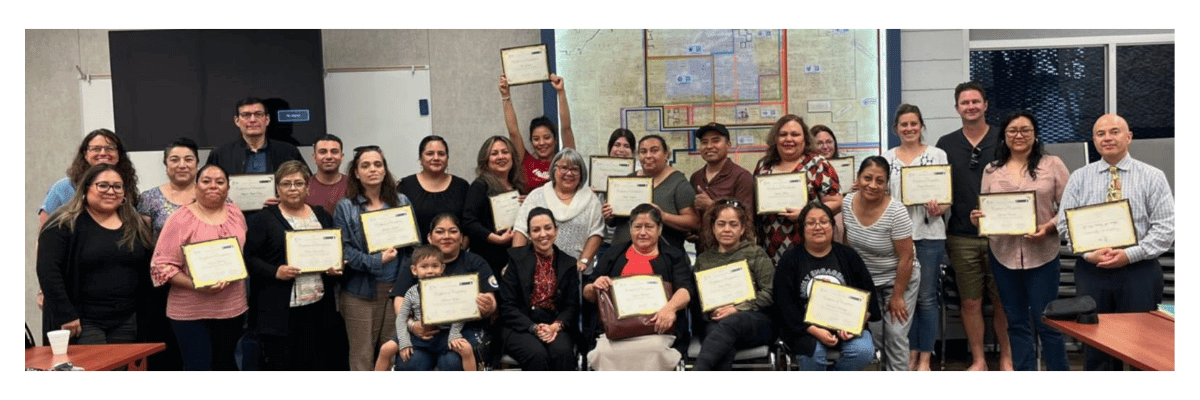
“We are always seeing that the school districts are changing and shifting towards the right direction, but it’s slow and it takes time,” Araceli said. “And at the same time that they’re improving, we’re also seeing other needs around mental health and chronic absenteeism. So we want to make sure that the schools are working more closely with families because in order to address all of it—absenteeism, mental health needs, academic and learning needs—they need to work together, otherwise they’re not going to be able to close these gaps.”
Another takeaway from PON’s EL Campaign was that the reclassification process needed to be more accessible—and attainable—for students and families. Reclassification refers to the process whereby a student is reclassified from EL status to Fluent English Proficient status. Students remain classified as an EL until they achieve proficiency in English on a variety of criteria, with testing occurring on an annual basis. Araceli explained that the existing reclassification criteria established far too many requirements for a student to meet within one school year, and that the wide variation in implementation and coordination capacity across schools presents significant obstacles and inequities. The new legislation that Araceli helped to craft streamlines this process and reduces decades-old barriers to reclassification.
“We are advocating for our champions, our EL advocates, to not shy away from improving the reclassification criteria and process,” Araceli said. “We know it’s messy, and that different actors, different people have different ways of fixing it. But it’s time to engage in that conversation because it’s not working. It’s confusing for both parents and implementers.”
Araceli highlighted that although this work is challenging, it is paramount to the success of ELs—and that Sobrato Philanthropies has helped PON in not just funding this important work, but providing spaces for these transformational conversations.
“Prior to Sobrato, I had been telling several of our coalition champions and leaders in different spaces about the reclassification challenge and for a while they weren’t listening,” Araceli said.“They kept dismissing it until Sobrato said ‘No, we funded all of these grassroots groups because we want to hear about families’ experiences and know reclassification is a big issue. We’re not going to dismiss it.’ The minute [Sobrato] made that statement, partners opened up to the conversation. To me, that’s a very concrete example of the role that funders can play beyond the dollars.”
Today, PON continues to share their report on 5 Key Learnings from their EL Campaign while supporting parents to become more adept at both monitoring their child’s academic progress and better locating resources to support overall student well-being and success. This work includes increased communications, outreach, and network-building to reach even more families.
“A high point in my job is those moments where parents really get to fully understand what’s happening,” Araceli said, “and we’ve seen how the system responds when the parents are present.” As Araceli recounted, some of these occasions—such as successful reclassifications—are pure joy. Others are rooted in welcome clarity around what’s next and needed in their child’s educational journey. For each family to the broader EL community at each school and district, this knowledge is power—power that is now unlocking student potential and changing both policy and practice.
To learn more about PON’s work, visit PON’s 2024 Annual Report and their 5 Key Learnings Brief and Report Summary and EL Data on key findings from their three-year EL Campaign.