
Thriving Communities
Previously known as our Silicon Valley Program (SVP), Sobrato Philanthropies’ Thriving Communities strategy is grounded not only in access, but in dignity — where every child benefits from high-quality education, every family feels safe and secure in their home, and neighborhoods celebrate the languages, cultures, and diversity that make them strong.
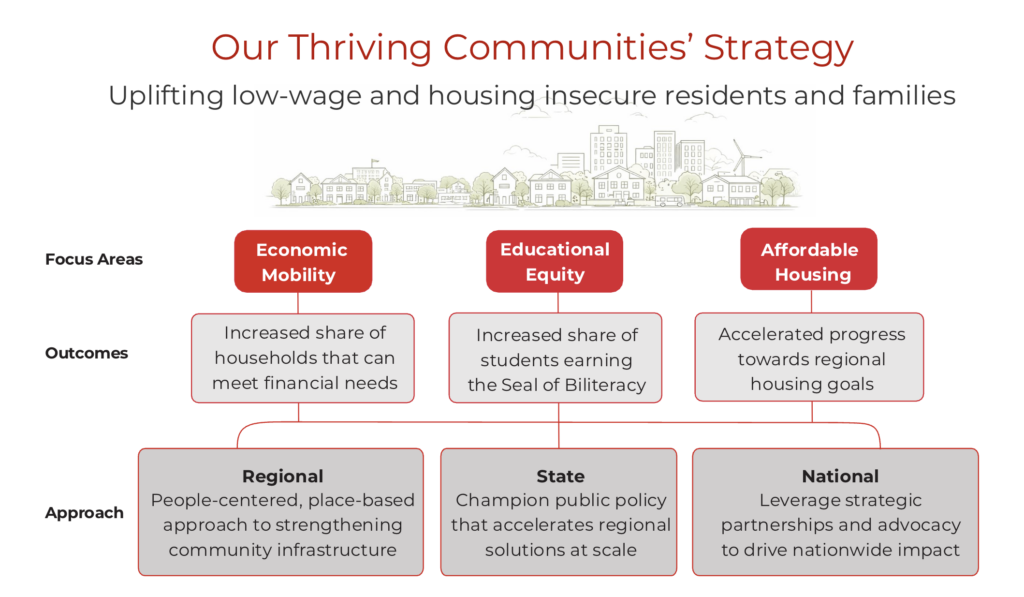
Thriving Communities serves as an umbrella for interconnected strategies designed to support low-wage and housing-insecure families on a path toward economic mobility, educational equity, housing security, and long-term stability. We approach this work at the regional level with a people-centered, place-based model designed to strengthen community infrastructure; at the state level focused on championing public policy that accelerates regional solutions at scale; and at the national level leveraging strategic partnerships and advocacy focused on driving nationwide impact.
Our grant and impact investments prioritize:
- Economic mobility – focused on increasing the share of households that can meet their financial needs.
- Educational equity (evolved from our English Language Learner program) – focused on improving the percentage of students earning the Seal of Biliteracy.
- Housing security – focused on tackling the affordable housing crisis with a multi-pronged approach of production, preservation, and policy.
Our strategy has a 10-year runway, which began in 2023, providing the continuity required for meaningful change. It is focused on eight communities in the San Francisco Bay Area with the highest social vulnerability needs:
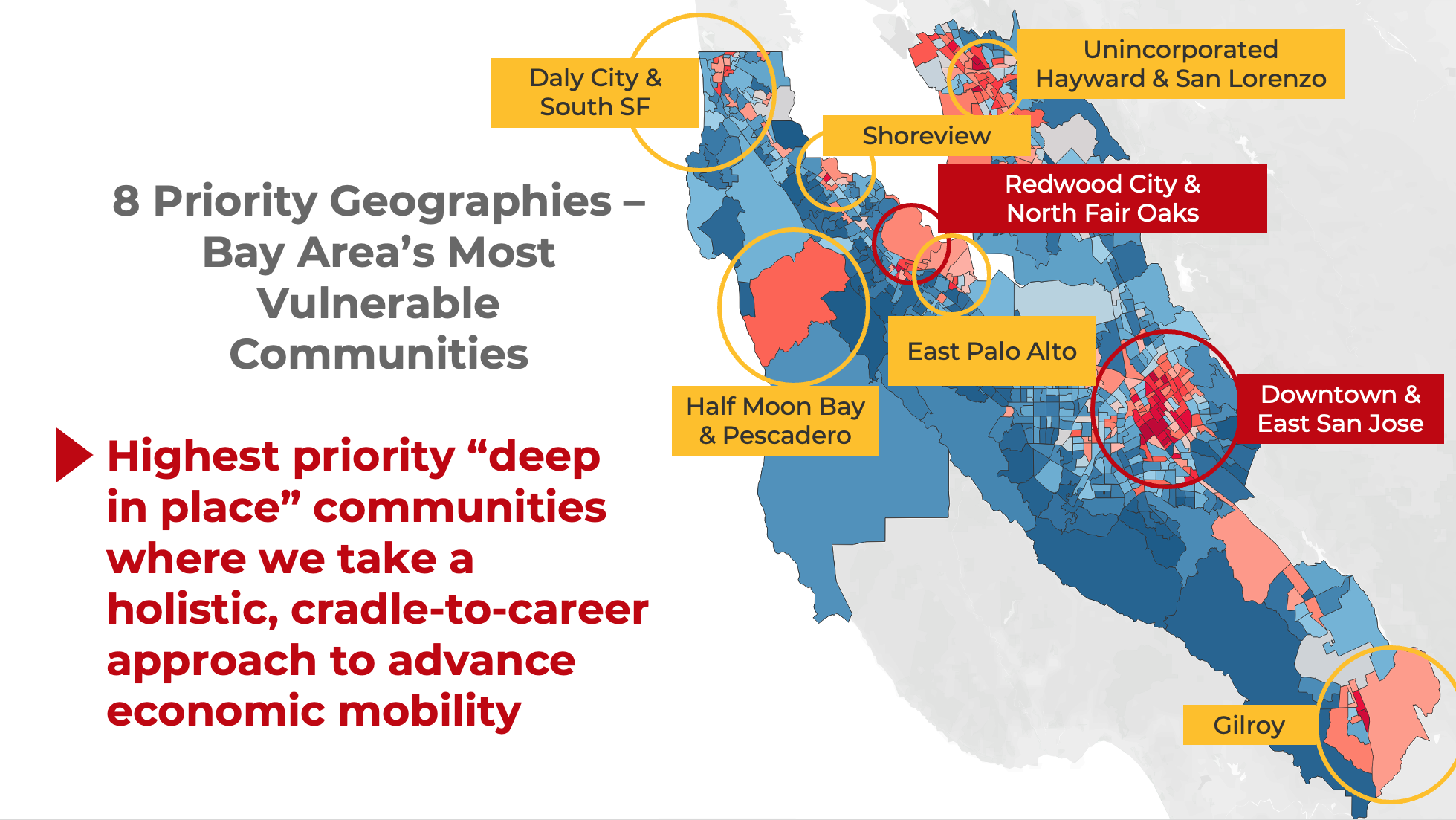
- Daly City & South SF
- Half Moon Bay & Pescadero
- Shoreview
- East Palo Alto
- Unincorporated Hayward & San Lorenzo
- Redwood City & North Fair Oaks
- Downtown & East San Jose
- Gilroy
Over the past 18 months, our Thriving Communities grants (including previous SVP grants) have touched more than one million people through services and programs such as education, health and food access. An investment of nearly $40 million helped provide $303 million in financial benefits for local residents, while partnerships spurred an additional $103 million in community investments — a multiplier effect that underscores the power of collaboration.